
Foldable PET foam insulation
Flat-pack insulation formats designed for storage efficiency and integrated pack-out planning.
COLD-CHAIN PACKAGING KITS
Coordinate foldable PET foam insulation, outer cartons, coolant, thermal liners and monitoring around the actual delivery lane.

SYSTEM-BASED PACK-OUT
A useful cold-chain brief begins with the product temperature requirement, expected duration, ambient exposure, loading method and destination market. We then review the insulation format and sourced components as one pack-out route.
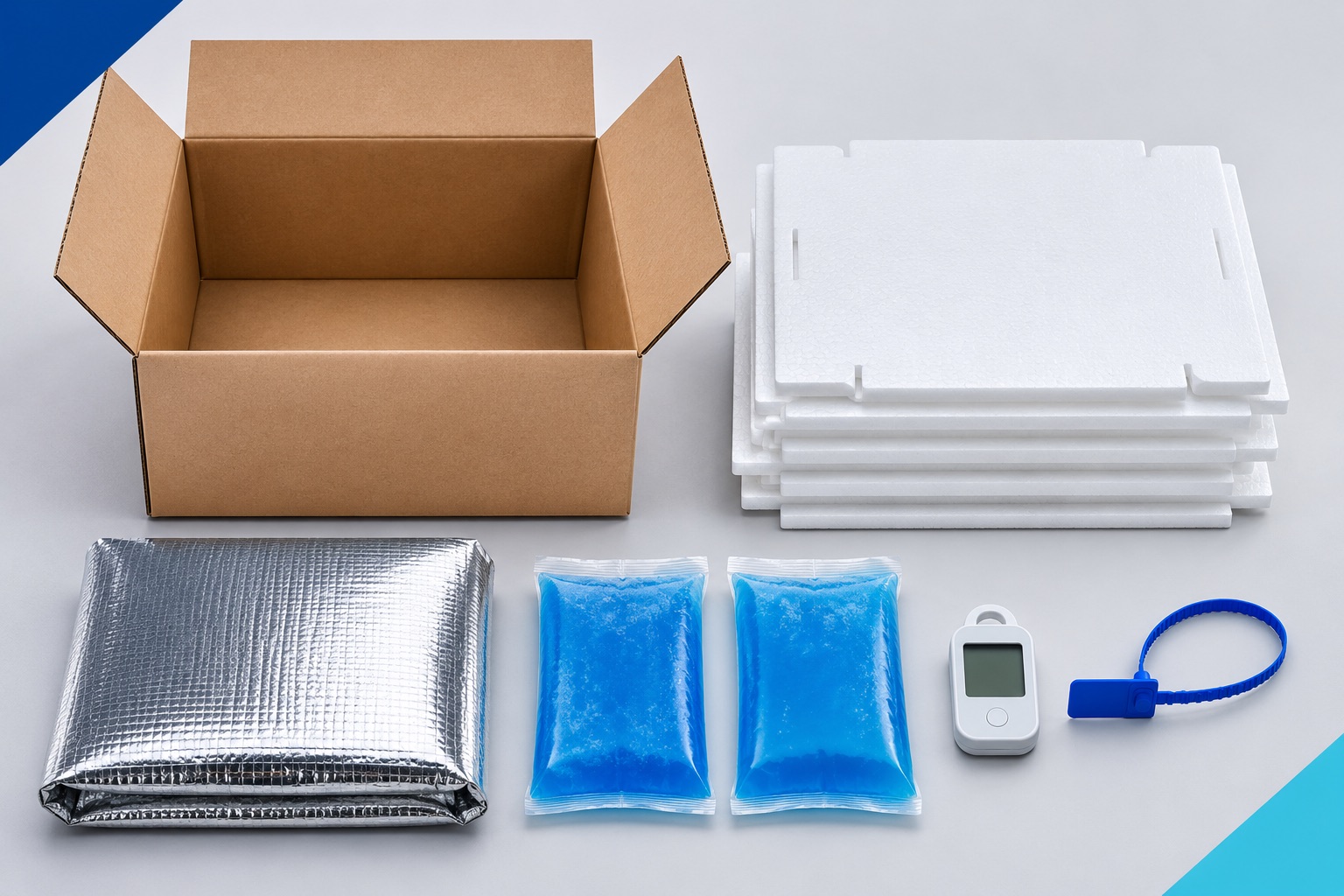
COMPONENT OPTIONS
Flat-pack insulation formats designed for storage efficiency and integrated pack-out planning.
Export-ready outer cartons matched to dimensions, handling and branding requirements.
Cooling media selected only after the target range, duration and shipment conditions are reviewed.
Reflective liners and containment layers evaluated for the pack-out configuration.
Monitoring options considered when the lane and evidence requirement call for them.
Component availability, material selection and supply role are confirmed per project.
PACKAGING REVIEW METHOD
Insulation, coolant and monitoring are interfaces in one pack-out system. A usable review identifies what is travelling, the intended temperature range, the transport route, the loading method and the evidence required before a sample or production plan is agreed.
Record product dimensions, weight, temperature requirement, permitted excursion criteria, origin, destination, expected duration and anticipated ambient exposure.
Review insulation format, internal arrangement, outer carton, coolant, containment, labels and monitoring as connected components rather than separate purchases.
Agree what the sample must demonstrate, who supplies each component and which product, material or destination-market requirements need project validation.
This is a project-planning workflow, not a thermal-duration claim. Thermal performance, coolant selection and monitoring requirements are confirmed only for the defined product and transport lane.
BUYER QUESTIONS
Use the first review to make the technical and supply assumptions visible before moving to samples or production planning.
See the packaging brief checklistNo. Thermal performance must be reviewed against the product, target range, permitted excursion criteria, duration, ambient exposure, loading method and defined transport lane.
PCM or gel packs, temperature indicators and data loggers can be considered as project-sourced components once the lane, product requirement and evidence need are defined.
Share product dimensions and weight, required temperature range, origin and destination, expected transport duration, ambient conditions, loading method, expected annual volume and sample timing.
Yes. Foldable PET foam insulation may be factory-made, while cartons and other components may be coordinated as integrated or project-sourced supply roles. The final supply role is confirmed per project.
Any food-contact, material declaration, temperature or destination-market requirement must be reviewed for the defined material, intended use and destination market before a statement is made.
PROJECT INPUTS